
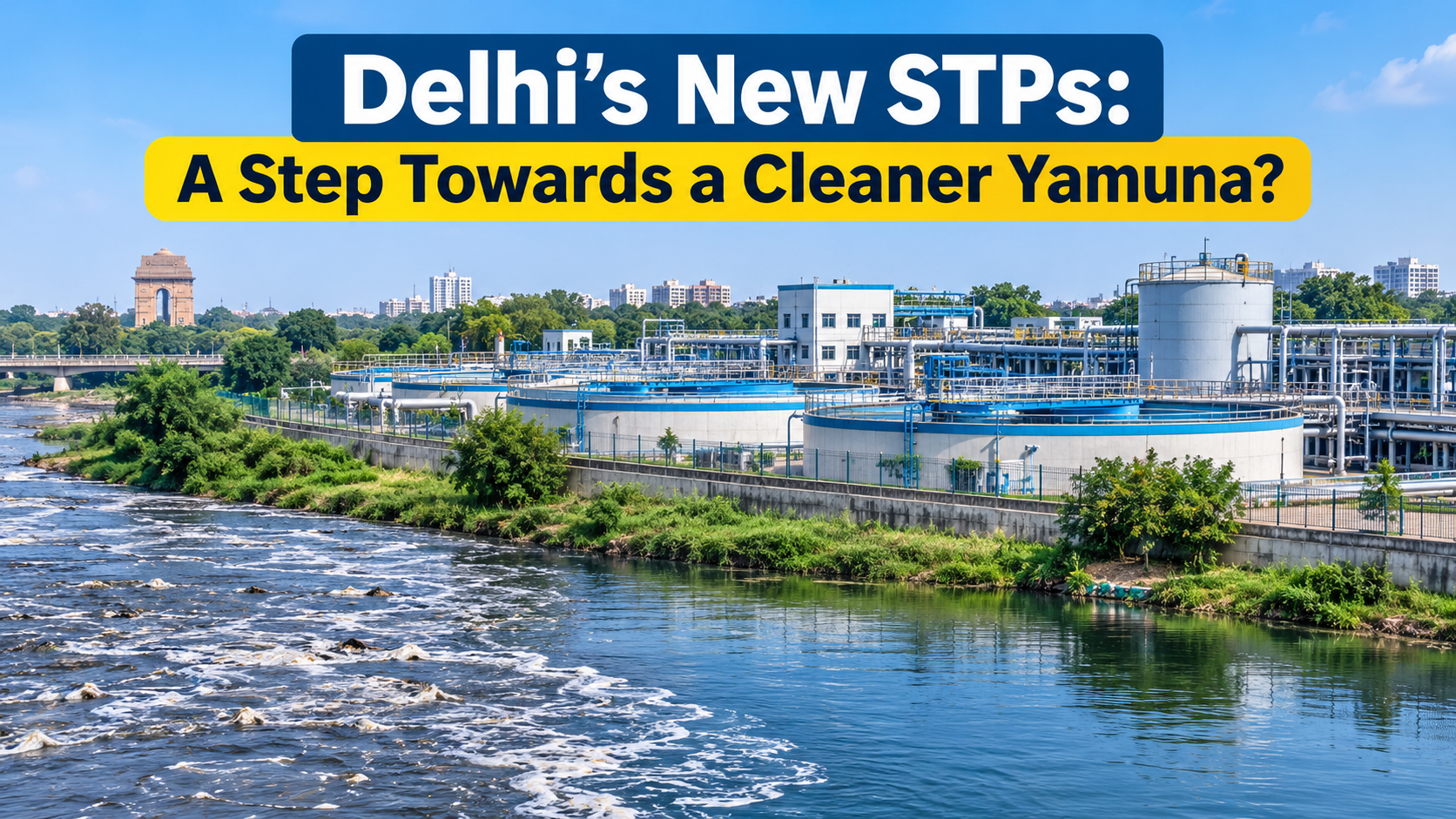
The Yamuna River is an important source of water for several regions, including Delhi. However, the increasing discharge of untreated sewage, industrial wastewater and domestic waste has created serious pollution challenges. Despite several river-cleaning initiatives, the entry of untreated wastewater into the river remains a major concern.
To address this issue, the Centre has approved two new Sewage Treatment Plants (STPs) in Delhi, with a combined treatment capacity of 250 million litres per day (MLD). The projects, estimated to cost approximately ?874.49 crore, are expected to strengthen Delhi's sewage treatment infrastructure and reduce the amount of untreated wastewater entering the Yamuna.
But how will these new facilities help improve river water quality, and why is better sewage management important for Delhi? Let's understand.
Two New Sewage Treatment Plants Approved in Delhi
The two proposed STPs will be developed at different locations to address sewage management challenges in the capital.
According to recent reports, the projects were approved by the empowered committee of the National Mission for Clean Ganga (NMCG) on November 12, 2026.
The two facilities include:
Rithala STP: A proposed sewage treatment plant with a capacity of 159 MLD to manage wastewater generated in parts of northwest Delhi.
Sen Nursing Home Drain STP: A 91 MLD facility planned near Indraprastha Metro Station to treat wastewater reaching the Sen Nursing Home drain.
Both projects will be implemented under the Namami Gange Mission-III through a public-private partnership model.
These facilities are expected to help reduce the gap between sewage generation and treatment capacity while preventing untreated wastewater from reaching the Yamuna.
Why Is the Yamuna Facing Increasing Pollution?
The pollution of the Yamuna is linked to several factors. One of the major concerns is the continuous discharge of untreated or partially treated sewage from residential areas, commercial establishments and industrial units.
Some important reasons include:
1. Untreated Domestic Sewage
Growing urban populations generate large volumes of wastewater every day. When residential areas lack proper sewer connections or treatment facilities, untreated sewage can enter nearby drains and eventually reach the river.
2. Industrial Wastewater Discharge
Industrial activities generate wastewater containing chemicals, oils, suspended solids and other pollutants. Without appropriate treatment through Effluent Treatment Plants (ETPs), this wastewater can contribute to water pollution.
3. Inadequate Sewer Connectivity
Even when sewage treatment infrastructure is available, wastewater cannot be properly treated if it does not reach the treatment facility. Poor sewer connectivity and incomplete drain interception can allow untreated sewage to enter water bodies.
4. Inefficient Treatment Infrastructure
Older treatment facilities may not always operate at their designed capacity or consistently meet the required discharge standards. Regular maintenance, monitoring and technology upgrades are necessary for effective performance.
How Will the New STPs Help Reduce Yamuna Pollution?
The proposed sewage treatment plants can contribute to improving the condition of the Yamuna by addressing some of the existing wastewater management challenges.
1. Reducing Untreated Sewage Discharge
The primary purpose of an STP is to collect and treat domestic wastewater before it is released into the environment or reused for suitable purposes.
The new facilities will provide additional treatment capacity, helping manage sewage that might otherwise flow into the Yamuna without adequate treatment.
2. Improving Wastewater Management in Delhi
With a combined capacity of 250 MLD, the two projects will strengthen the city's existing sewage treatment infrastructure.
Additional treatment capacity can help manage increasing wastewater volumes as Delhi continues to expand.
3. Supporting Better River Water Quality
Proper sewage treatment helps remove organic pollutants, suspended solids and other contaminants from wastewater.
This can reduce the pollution load entering the river and support improvements in water quality over time.
4. Encouraging Wastewater Reuse
Treated sewage can be reused for suitable non-drinking purposes, including gardening, landscaping, industrial processes and certain municipal activities, depending on its treatment quality.
Reusing treated wastewater can reduce pressure on freshwater resources and support more sustainable water management.
Why Are Modern Sewage Treatment Technologies Important?
Building new STPs is an important step, but their long-term performance depends on selecting suitable treatment technologies and maintaining them properly.
Modern sewage treatment systems generally involve multiple treatment stages:
Primary Treatment: Removes larger solid materials, grit and suspended particles from incoming sewage.
Secondary Treatment: Uses biological processes to reduce organic pollutants present in wastewater.
Tertiary Treatment: Provides additional filtration and disinfection to improve treated water quality according to its intended use.
Sludge Management: Collects and manages the sludge generated during the treatment process through appropriate handling and disposal methods.
The treatment process may vary depending on wastewater characteristics, plant capacity and applicable discharge requirements.
What More Is Needed to Make the Yamuna Cleaner?
The approval of two new STPs is a positive development, but increasing treatment capacity alone cannot solve Delhi's entire pollution problem.
Several additional measures are necessary:
Expanding sewer networks so wastewater from more residential areas reaches treatment facilities.
Ensuring existing STPs operate efficiently and meet prescribed discharge standards.
Monitoring industrial wastewater through suitable ETP systems.
Preventing untreated sewage from entering drains connected to the Yamuna.
Conducting regular water quality testing and maintaining treatment infrastructure.
Promoting the reuse of properly treated wastewater wherever possible.
A coordinated approach involving sewage collection, treatment, monitoring and maintenance is essential for achieving long-term improvements.
Conclusion
The approval of two new STPs at Rithala and near Indraprastha Metro Station represents an important step towards strengthening Delhi's wastewater management infrastructure. With an additional treatment capacity of 250 MLD, these projects are expected to help reduce untreated sewage discharge into the Yamuna.
However, cleaner rivers require more than new treatment facilities. Proper sewer connectivity, efficient plant operations, industrial wastewater management and regular monitoring are equally important.
As water pollution and freshwater conservation become increasingly important concerns, investing in reliable sewage treatment and wastewater management solutions will remain essential for building cleaner and more sustainable cities.
Powered by Froala Editor