
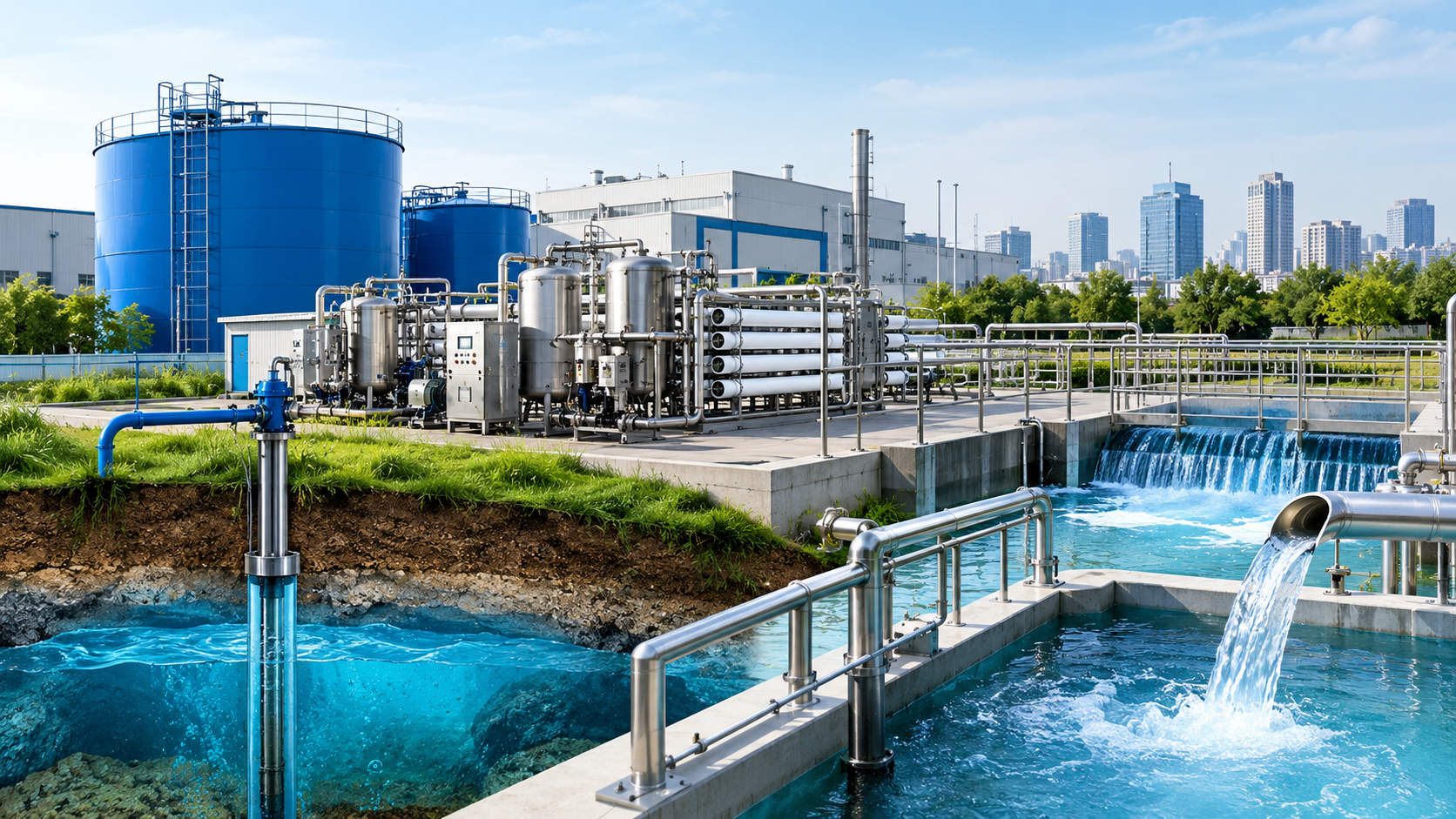
A manufacturing unit cannot afford an unreliable water supply. Water interruptions can affect production schedules, cleaning operations and equipment performance. For industries in Gurugram, managing this requirement is becoming increasingly important as authorities look for ways to reduce dependence on groundwater.
Reports published in October 2026 highlighted plans to curb groundwater extraction in Gurugram and increase the use of treated wastewater for appropriate applications. The reported initiative includes supplying treated water to industrial users, bringing water recycling into focus for businesses that consume large quantities of water.
For factory owners, the development raises a practical question: how can a business continue meeting its daily water requirements while reducing its reliance on borewells?
What the Groundwater Initiative Means for Gurugram's Factories
Groundwater has traditionally provided industries with a convenient source of water. However, depending on a single source creates challenges when extraction comes under greater scrutiny or local resources face increasing pressure.
A different approach is to examine how much fresh water a facility genuinely needs for each activity. Water used in a sensitive manufacturing process may require a specific quality, while some cleaning or utility operations may be able to use properly treated recycled water.
This distinction matters because industrial water demand is rarely uniform. A textile unit, a food-processing facility and an engineering workshop can have very different water requirements. Each business must identify suitable reuse opportunities according to its own operations.
Gurugram's reported plans make this a timely subject for industries reviewing their water procurement and wastewater management practices.
Can Wastewater Become a Useful Industrial Resource?
Water that leaves a factory is not necessarily suitable for immediate reuse. It may contain process chemicals, suspended material, oils, dyes or dissolved salts. Nevertheless, the right treatment process can make some wastewater streams suitable for another application.
Consider a facility that generates wastewater every working day. If part of that stream can be treated to the required standard, the recovered water may serve selected non-potable uses. This can reduce the amount of fresh water required for those activities.
The opportunity depends on the wastewater itself. Some streams are easier to treat than others, and certain production processes demand exceptionally controlled water quality. A business should therefore test its wastewater and identify the intended reuse application before deciding how much water can be recovered.
The aim is to create a workable balance between water quality, recovery, operating costs and production needs.
Choosing the Right Treatment System for Industrial Wastewater
The treatment equipment should match the problem a facility needs to solve. Installing a system without understanding the wastewater composition can lead to unsuitable output quality or unnecessary operating expenses.
An Effluent Treatment Plant (ETP) is relevant when wastewater originates from industrial processes. Its design depends on the pollutants generated by the facility, the volume of wastewater and the required treatment outcome.
Where sewage comes from staff facilities, offices or other domestic sources, a Sewage Treatment Plant (STP) may be required. Whether its treated output can be reused depends on the quality achieved and the requirements of the proposed application.
Some industries need further treatment to reduce dissolved salts. In such cases, an Advanced Reverse Osmosis System may be considered after assessing the feed water and desired output quality.
Facilities with more demanding water recovery objectives can investigate a Zero Liquid Discharge system. The decision requires careful consideration of wastewater characteristics, residual waste management, energy consumption and the feasibility of the overall process.
These systems address different requirements, so the selection should follow a technical assessment rather than a one-size-fits-all approach.
What Should Businesses Check Before Investing?
Before choosing a wastewater treatment plant, an industry should establish how its existing water supply is used and where wastewater is generated. This helps identify potential recovery points and avoid designing equipment around inaccurate estimates.
Laboratory testing is an important next step. The results help engineers determine which contaminants need to be removed and whether additional treatment will be necessary for the intended reuse.
Capacity planning also matters. The plant must accommodate variations in wastewater flow, changes in production and the volume of water required by the receiving process.
Businesses should consider the complete operating arrangement, including electricity, chemicals, maintenance, filter or membrane replacement and the management of treatment residues. A system that performs well during installation must also remain practical to operate over time.
Applicable pollution-control requirements and reuse standards should be checked before implementation. Recycled water must meet the relevant criteria for its intended purpose.
Neel Guard Aqua Systems for Water Treatment Requirements
Neel Guard Aqua Systems offers water and wastewater treatment solutions for industrial and commercial applications. Its range includes ETP, STP, advanced RO and ZLD systems that can be evaluated according to a facility's treatment objectives.
For businesses in Gurugram, the starting point is to understand the wastewater being generated, the quantity available for treatment and the quality needed after processing. These details help establish which treatment approach may be suitable.
A properly assessed solution can help a business explore water recovery opportunities while accounting for operational requirements and applicable standards. The potential benefits will depend on the facility, wastewater composition and system design.
Planning a Wastewater Treatment Plant for Your Industry?
If your business is reviewing its groundwater consumption or exploring industrial water recycling, contact Neel Guard Aqua Systems to discuss your treatment requirements.
The team can help you explore suitable ETP, STP, advanced RO and ZLD options based on your wastewater source, treatment capacity and intended application.
Call: +91 9899484477
Address: Plot No. 254, Block C, Sector 5, Bawana DSIIDC Industrial Area, New Delhi.
Frequently Asked Questions
1. Why is Gurugram focusing on groundwater reduction?
The reported initiative aims to reduce dependence on groundwater and encourage alternative sources, including treated wastewater for suitable applications.
2. Can factories reuse their own wastewater?
Some factories can recover and reuse wastewater after appropriate treatment. Feasibility depends on the wastewater composition and the quality required for the intended application.
3. How can an industry determine the correct ETP capacity?
The design should account for wastewater flow, variations in production, pollutant characteristics and the required treatment outcome.
4. When might reverse osmosis be needed?
Reverse osmosis may be suitable when dissolved salts and other membrane-separable substances need to be reduced to meet the required water quality.
5. Does wastewater recycling eliminate the need for fresh water?
Not necessarily. The amount of freshwater that can be replaced depends on treatment performance, the quality requirements of each process and the availability of wastewater for recovery.
Powered by Froala Editor