
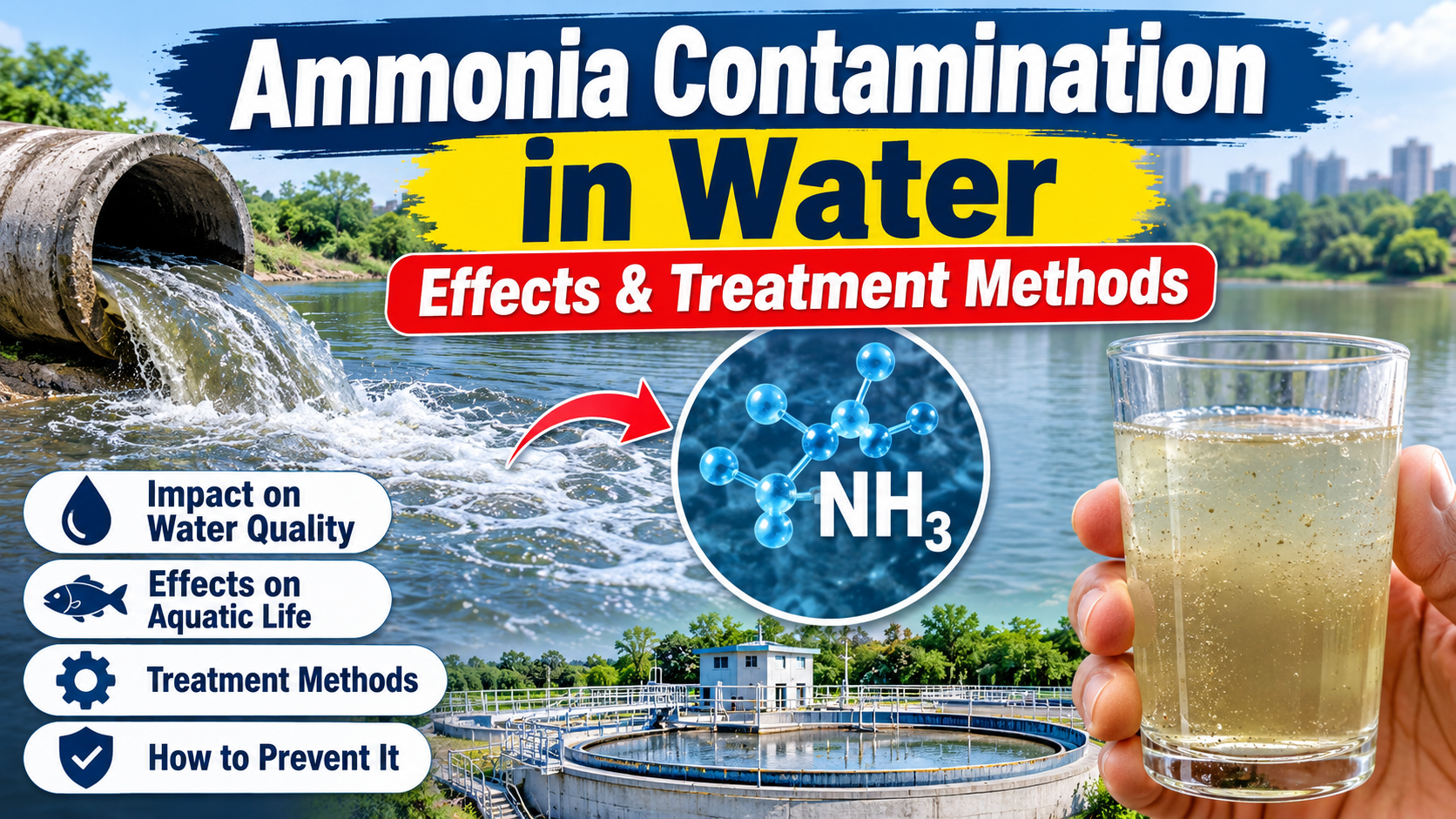
Water pollution has become a growing concern in India, especially in cities that depend on rivers for their daily water supply. The Yamuna River is one such example. Reports of rising ammonia levels in the Yamuna have once again highlighted the challenges of maintaining clean water and managing river pollution.
In November 2026, ammonia levels at the Wazirabad point of the Yamuna reportedly increased to around 1.5–2 parts per million (ppm). This affected water treatment operations and raised concerns about Delhi's water supply. The incident highlighted an important issue: even when water is available in sufficient quantities, pollution can make it difficult to treat and use safely.
Understanding ammonia contamination, its sources and the available treatment methods is important for better water management.
What Is Ammonia Contamination in Water?
Ammonia is a nitrogen-based compound that can enter water through natural processes as well as human activities. However, high ammonia concentrations in rivers, lakes and groundwater can indicate pollution.
It commonly enters water bodies through:
Untreated domestic sewage
Industrial wastewater discharge
Agricultural runoff containing fertilisers
Waste from certain manufacturing processes
Decomposition of organic matter
When wastewater is released without proper treatment, ammonia and other pollutants can enter nearby water sources. This can affect water quality and create additional challenges for water treatment facilities.
Why Are Rising Ammonia Levels in the Yamuna a Concern?
The Yamuna is an important water source for Delhi. However, the river receives wastewater from several domestic and industrial sources along its route.
When ammonia concentrations increase, conventional water treatment plants may find it difficult to process the incoming raw water. Ammonia reacts with chlorine, which is commonly used for disinfection. This increases chlorine demand and can lead to the formation of chloramines.
As a result, treatment plants may need to adjust their treatment processes, reduce production or use cleaner water sources for dilution, depending on the level of contamination and plant design.
The Yamuna incident shows why controlling pollution at its source is just as important as treating water at the final stage.
How Does Ammonia Affect Water Quality?
High ammonia concentrations can affect water quality in several ways.
1. Makes Drinking Water Treatment More Difficult
Ammonia reacts with chlorine during the disinfection process. This can reduce the amount of chlorine available for effective disinfection and require additional treatment measures.
2. Affects Aquatic Life
Excess ammonia can be harmful to fish and other aquatic organisms. Its toxicity depends on factors such as pH and temperature. Higher levels of un-ionised ammonia can cause greater harm to aquatic life.
3. Indicates Wastewater Pollution
High ammonia levels may point towards untreated sewage, industrial discharge or agricultural pollution entering a water source.
4. Increases Treatment Requirements
Water containing high ammonia levels may require additional treatment processes and regular monitoring. This can increase the operational challenges faced by water treatment facilities.
What Causes Ammonia Pollution in Rivers?
Ammonia pollution is often linked to the discharge of untreated or poorly treated wastewater.
Domestic sewage: Wastewater from homes and residential areas contains organic matter and nitrogen compounds. If sewage is not treated properly, these substances can enter rivers and other water bodies.
Industrial effluents: Industries such as chemical manufacturing, fertiliser production, food processing and other manufacturing units may generate wastewater containing nitrogen compounds. Releasing such effluents without proper treatment can contribute to water pollution.
Agricultural runoff: Excess fertilisers used in agricultural fields can enter nearby water bodies through rainwater runoff. This may increase nitrogen levels in rivers and lakes.
Poor wastewater management: Inadequate sewage infrastructure, leaking drains and improper disposal practices can also contribute to ammonia contamination.
How Can Ammonia Be Removed from Water?
The treatment method depends on the ammonia concentration, water characteristics and intended use of the treated water. Different technologies may be used individually or together to achieve the required water quality.
1. Biological Treatment
Biological treatment uses specialised microorganisms to convert ammonia into other nitrogen compounds through a process called nitrification.
This process generally converts ammonia into nitrite and then nitrate under suitable conditions. Additional denitrification may be used when nitrogen removal is required.
It is commonly considered in sewage and industrial wastewater treatment applications.
2. Chlorination
Chlorination can help remove ammonia through a process known as breakpoint chlorination. However, it requires careful control of chlorine dosage, water chemistry and contact time.
It should not be confused with routine disinfection, as incorrect dosing can create unwanted disinfection by-products.
3. Ion Exchange
Ion exchange is another method that can be used for ammonia removal in suitable water conditions. It works by exchanging ammonium ions with other ions present in a treatment medium.
The selection of this process depends on water quality, treatment capacity and operating requirements.
4. Air Stripping
Air stripping removes ammonia by transferring it from water into an air stream. The process generally requires suitable pH conditions and may need additional systems to manage the ammonia released into the air.
It is used in certain industrial wastewater treatment applications.
5. Reverse Osmosis
Reverse osmosis uses a semi-permeable membrane to separate dissolved substances from water. Its effectiveness for ammonia removal depends on factors such as ammonia's chemical form, pH and operating conditions.
RO is generally considered as part of a suitable treatment arrangement rather than a universal solution for every type of ammonia contamination.
Why Is Proper Industrial Wastewater Treatment Important?
Industrial wastewater is one of the sources that can contribute to pollution when it is not managed properly. Manufacturing units need to identify the pollutants present in their wastewater and select treatment processes according to their discharge or reuse requirements.
An effective industrial wastewater treatment system can help reduce pollutants before treated effluent is discharged or reused. Depending on the wastewater characteristics, the treatment process may include physical, chemical and biological stages.
Industries should also carry out regular wastewater testing and maintain their treatment equipment to ensure consistent performance.
For businesses looking for suitable treatment solutions, an ETP plant for industrial wastewater treatment can be considered based on the type of industry, wastewater load and required treatment standards.
How Can Industries Help Prevent River Pollution?
Preventing water pollution requires action before wastewater reaches natural water sources. Industries can take several practical steps to improve their wastewater management.
Install suitable effluent treatment systems based on wastewater characteristics.
Monitor the quality of wastewater before discharge.
Avoid releasing untreated industrial effluents into drains and rivers.
Maintain treatment equipment and carry out regular inspections.
Reuse treated wastewater wherever technically and legally suitable.
Follow applicable pollution control guidelines and discharge standards.
These measures can help reduce the amount of untreated wastewater entering rivers and support better water resource management.
How Neel Guard Aqua Systems Supports Better Water Management
Rising water pollution highlights the need for better wastewater treatment and responsible water management. While river cleaning and water quality monitoring are important, preventing untreated wastewater from entering natural water sources is equally necessary.
Companies working in the water treatment sector play an important role in this process.
Neel Guard Aqua Systems is a water and wastewater treatment solutions provider with over 15 years of experience. The company provides treatment solutions for industrial, commercial and institutional applications.
Its range of solutions includes Effluent Treatment Plants (ETP), Sewage Treatment Plants (STP), Reverse Osmosis (RO) Plants, Water Treatment Plants (WTP), Ultrafiltration (UF), Demineralisation (DM) Plants, water softeners and wastewater recycling systems.
These systems are selected according to factors such as wastewater characteristics, treatment capacity, pollutant levels and the intended use of treated water. They can help businesses manage wastewater more effectively, reduce their environmental impact and explore suitable water recycling opportunities.
With over 1,000 installations and experience across different industries, Neel Guard Aqua Systems works towards providing practical water treatment solutions based on individual project requirements.
Businesses looking to improve their wastewater management can explore the water and wastewater treatment solutions offered by Neel Guard Aqua Systems.
Conclusion
The ammonia contamination issue in the Yamuna highlights the importance of maintaining water quality and improving wastewater management. Rising ammonia levels can make drinking water treatment more difficult, affect aquatic life and increase the need for additional treatment processes.
Preventing pollution at its source is an important step towards protecting rivers and groundwater. With suitable sewage treatment, industrial effluent management and regular water quality monitoring, it is possible to reduce the release of harmful pollutants into natural water bodies.
As industries and cities continue to face water management challenges, investing in appropriate wastewater treatment technologies will play an important role in supporting cleaner water resources and sustainable development.
Powered by Froala Editor