
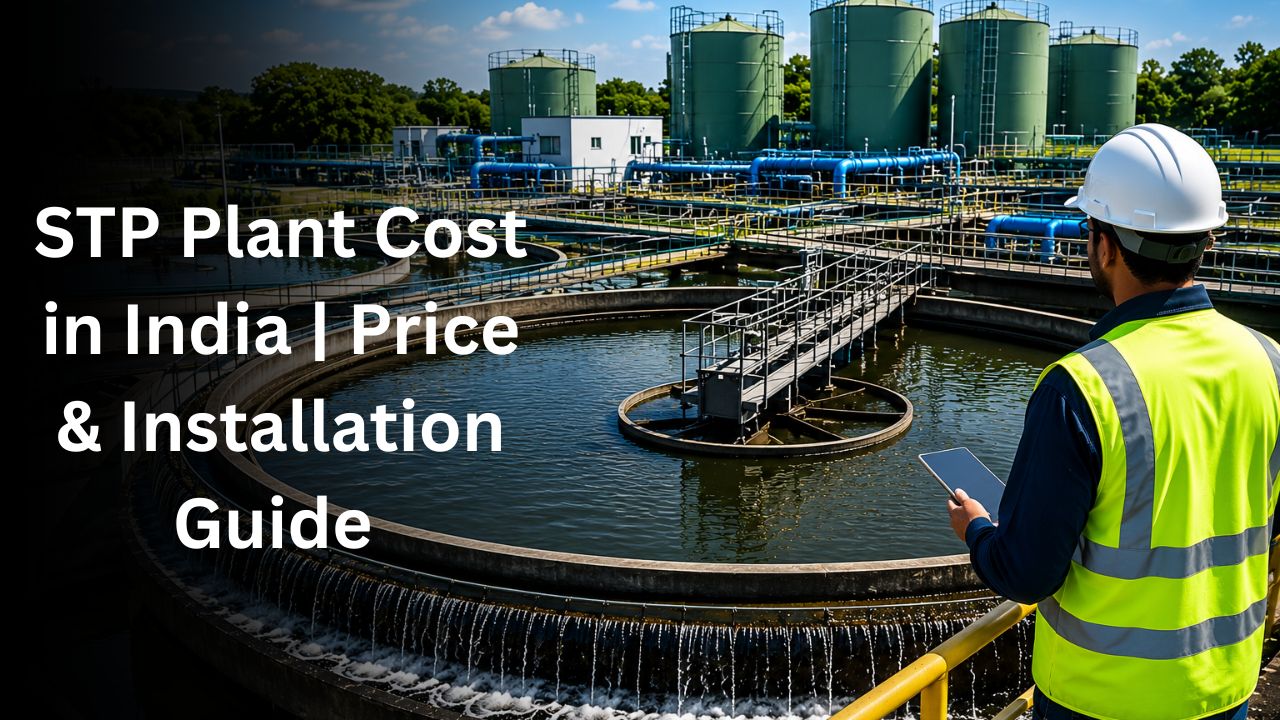
A Sewage Treatment Plant (STP) is a wastewater treatment system designed to remove contaminants from domestic and commercial sewage before the treated water is safely discharged or reused. The treatment process removes suspended solids, organic pollutants, and harmful microorganisms through a combination of physical, biological, and chemical processes.
Today, sewage treatment plants are widely installed in residential societies, hotels, hospitals, office buildings, shopping malls, educational institutions, industries, and municipal projects. Treated water from an STP can often be reused for flushing, landscaping, cooling towers, and other non-potable applications, helping organisations conserve freshwater resources while meeting environmental regulations.
What is the Average STP Plant Cost in India?
The STP plant cost in India varies depending on the project's technical and operational requirements. Every installation is customised according to wastewater flow, treatment objectives, available space, and applicable discharge standards.
A compact STP designed for a small commercial building requires different equipment and infrastructure than a large-capacity plant developed for a manufacturing facility or residential township. Therefore, the final project cost depends on the combination of engineering, equipment selection, and installation scope rather than a fixed market price.
Businesses should also consider the plant's long-term operating expenses, maintenance requirements, energy consumption, and service support before making a purchase decision. A well-designed STP provides better value over its lifecycle than simply choosing the lowest quotation.
Factors Affecting STP Plant Cost in India
Several factors influence the overall sewage treatment plant cost. Understanding these elements helps buyers select a solution that balances performance, compliance, and long-term operating efficiency.
1. Plant Capacity
Treatment capacity is one of the primary factors influencing the total project cost. A higher-capacity STP requires larger tanks, increased pumping capacity, additional treatment equipment, and more extensive piping, which naturally increases the overall investment.
Selecting the correct capacity based on daily wastewater generation and future expansion plans helps avoid unnecessary capital expenditure while ensuring reliable treatment performance.
2. Treatment Technology
The treatment technology selected plays a significant role in determining both the initial investment and the operating cost of the system.
Modern sewage treatment plants commonly use technologies such as:
Moving Bed Biofilm Reactor (MBBR)
Sequential Batch Reactor (SBR)
Membrane Bioreactor (MBR)
Activated Sludge Process (ASP)
Each technology offers different advantages in terms of treatment efficiency, maintenance requirements, energy consumption, space utilisation, and treated water quality. The right choice depends on your project's wastewater characteristics and operational goals.
3. STP Plant Installation Cost
The STP plant installation cost includes much more than simply placing equipment on-site. A successful installation involves engineering, mechanical work, electrical integration, piping, testing, and commissioning to ensure the plant operates efficiently.
Depending on the project scope, installation may include:
Site inspection
Foundation preparation
Equipment installation
Piping connections
Electrical wiring
Control panel integration
Testing and commissioning
Operator training
Civil work and site conditions may also influence the final installation cost.
4. Automation Level
Modern STPs increasingly use automated control systems to improve operational efficiency. PLC-based panels, SCADA monitoring, remote monitoring systems, and automated dosing units may increase the initial investment but help reduce manual intervention, improve treatment consistency, and minimise long-term operating costs.
5. Wastewater Characteristics
The quality and composition of wastewater vary depending on the application. Residential sewage differs significantly from wastewater generated by hospitals, hotels, commercial complexes, and industrial facilities.
Projects handling higher pollutant loads or stricter discharge standards may require additional treatment stages, specialised equipment, or advanced filtration systems, which can increase the overall project cost.
STP Plant Cost by Capacity
Plant capacity is one of the most important considerations when estimating the STP plant price in India. Every project generates a different volume of wastewater, so the treatment system must be designed accordingly.
Small-capacity plants are generally suitable for apartments, schools, and small commercial establishments. Medium-capacity systems are commonly used in hotels, hospitals, office complexes, and housing societies, while large-capacity sewage treatment plants are designed for industrial facilities, municipal infrastructure, and large residential developments.
Selecting the correct capacity helps optimise capital investment, improve treatment efficiency, and minimise future operational expenses.
STP Plant Cost by Technology
The technology selected for your sewage treatment plant has a direct impact on both the initial investment and long-term operating expenses. Every treatment process offers unique advantages based on wastewater characteristics, available installation space, treated water quality requirements, and maintenance expectations.
MBBR (Moving Bed Biofilm Reactor) technology is widely preferred for commercial and residential projects due to its compact design, stable treatment performance, and comparatively lower maintenance requirements.
SBR (Sequential Batch Reactor) systems are suitable for projects requiring high treatment efficiency with automated operation. They are commonly installed in residential townships, educational institutions, and commercial complexes.
MBR (Membrane Bioreactor) technology provides superior treated water quality and is often selected where treated water reuse is a priority. Although the initial investment may be higher, it offers excellent filtration performance in a compact footprint.
Activated Sludge Process (ASP) is generally used for large-scale industrial and municipal applications where sufficient installation space is available.
Selecting the right technology should always be based on wastewater characteristics, discharge requirements, operational costs, and future maintenance rather than focusing only on the purchase price.
Operating and Maintenance Cost of an STP Plant
While evaluating the STP plant cost in India, buyers should also consider the long-term operating and maintenance expenses. These recurring costs play an important role in determining the total lifecycle cost of the plant.
Operating expenses typically include electricity consumption, routine equipment servicing, sludge removal, replacement of consumable parts, and preventive maintenance. Plants equipped with energy-efficient blowers, pumps, and automation systems generally require lower operating costs over time.
Regular inspections and scheduled maintenance not only improve treatment efficiency but also reduce the likelihood of unexpected breakdowns and expensive repairs. Investing in a quality sewage treatment plant with reliable components helps minimise long-term operational expenses.
How to Choose the Right STP Plant
Choosing the right sewage treatment plant requires more than comparing quotations from different manufacturers. Every project has unique wastewater treatment requirements that should be carefully evaluated before making an investment.
Before selecting an STP, consider the following factors:
Daily wastewater generation
Future expansion plans
Available installation space
Treatment technology
Desired treated water quality
CPCB/SPCB compliance requirements
Energy efficiency
Operation and maintenance costs
Availability of technical support
Manufacturer's experience
Partnering with an experienced manufacturer helps ensure the plant is designed according to your operational requirements while delivering reliable long-term performance.
STP Plant Cost Across Different Locations in India
Although the STP plant cost in India is primarily influenced by technical specifications, project location can also affect the overall investment. Transportation, site accessibility, labour availability, installation complexity, and local compliance requirements may vary from one region to another.
STP Plant Cost in Delhi
The STP plant cost in Delhi depends on factors such as treatment capacity, technology selection, installation requirements, and project specifications. Neel Guard Aqua Systems provides customised sewage treatment solutions for residential, commercial, institutional, and industrial projects across Delhi.
STP Plant Cost in Haryana
The STP plant cost in Haryana varies according to wastewater generation, plant capacity, treatment technology, and automation requirements. Our engineering team designs efficient systems that support regulatory compliance while reducing long-term operating costs.
STP Plant Cost in Assam
Businesses searching for the STP plant cost in Assam should consider project-specific factors such as wastewater characteristics, installation conditions, and discharge requirements. We provide customised STP solutions designed for reliable performance and efficient wastewater treatment.
STP Plant Cost in Roorkee
The STP plant cost in Roorkee depends on project size, treatment objectives, and installation scope. Our experienced engineers recommend suitable treatment technologies that balance performance, compliance, and operational efficiency.
STP Plant Cost in Jharkhand
The STP plant cost in Jharkhand varies depending on treatment capacity, wastewater quality, and project complexity. Neel Guard Aqua Systems offers customised solutions designed to meet the specific needs of commercial, institutional, and industrial projects.
STP Plant Cost in Uttar Pradesh
Businesses looking for the STP plant cost in Uttar Pradesh can benefit from customised sewage treatment systems designed according to wastewater generation, site conditions, and environmental regulations. Our team helps clients select the most suitable solution for long-term performance.
Why Choose Neel Guard Aqua Systems?
With over 15 years of industry experience, Neel Guard Aqua Systems has established itself as a trusted manufacturer of customised sewage treatment solutions across India. Our engineering team works closely with every client to understand project requirements and recommend the most suitable treatment technology based on wastewater characteristics, available space, and compliance standards.
From design and manufacturing to installation, commissioning, and after-sales support, we provide complete wastewater treatment solutions that deliver consistent performance and long-term reliability. Every system is designed with a focus on operational efficiency, water conservation, and environmental compliance.
Get Expert Guidance for Your STP Project
Selecting the right sewage treatment plant is an important investment that impacts operational efficiency, regulatory compliance, and long-term costs. Whether you need an STP for a residential society, hotel, hospital, commercial building, educational institution, or industrial facility, our experts can help you choose the right capacity and treatment technology for your project.
Contact Neel Guard Aqua Systems today to discuss your wastewater treatment requirements and receive a customised STP solution designed for your business.
Frequently Asked Questions
1. What is the average STP plant cost in India?
The STP plant cost in India depends on treatment capacity, technology, installation requirements, automation level, wastewater characteristics, and project specifications. Every project is customised based on site-specific requirements.
2. What factors affect sewage treatment plant cost?
The overall sewage treatment plant cost is influenced by plant capacity, treatment technology, installation complexity, automation, wastewater quality, environmental compliance requirements, and long-term operating considerations.
3. Does STP plant installation cost include civil work?
The installation scope varies depending on the project. Some installations include only equipment supply and commissioning, while turnkey projects may also cover civil work, piping, electrical integration, and operator training.
4. Which STP technology is the most cost-effective?
There is no single technology suitable for every project. MBBR, SBR, MBR, and ASP each offer different advantages depending on wastewater characteristics, available space, treated water quality requirements, and operating costs.
5. Can treated water from an STP be reused?
Yes. Properly treated water can be reused for landscaping, toilet flushing, cooling towers, floor cleaning, gardening, and other non-potable applications, helping organisations reduce freshwater consumption.
6. How do I choose the right STP capacity?
The correct capacity depends on daily wastewater generation, occupancy, future expansion plans, treated water reuse requirements, and applicable environmental regulations.
7. How long does a sewage treatment plant last?
A well-designed sewage treatment plant can provide reliable performance for many years when operated and maintained correctly. Regular servicing and preventive maintenance help maximise equipment life and treatment efficiency.
8. Which industries require an STP?
Sewage treatment plants are commonly installed in residential societies, hotels, hospitals, schools, colleges, commercial buildings, shopping malls, manufacturing facilities, IT parks, and municipal infrastructure projects.
9. Why should I choose Neel Guard Aqua Systems?
Neel Guard Aqua Systems offers over 15 years of industry expertise, customised wastewater treatment solutions, quality engineering, professional installation, and dependable after-sales support for commercial, industrial, and institutional projects.
10. How can I get a customised STP quotation?
Simply share your daily wastewater generation, project location, application, and treatment requirements with our team. We'll recommend the most suitable STP configuration and provide a customised quotation based on your project needs.
Powered by Froala Editor