
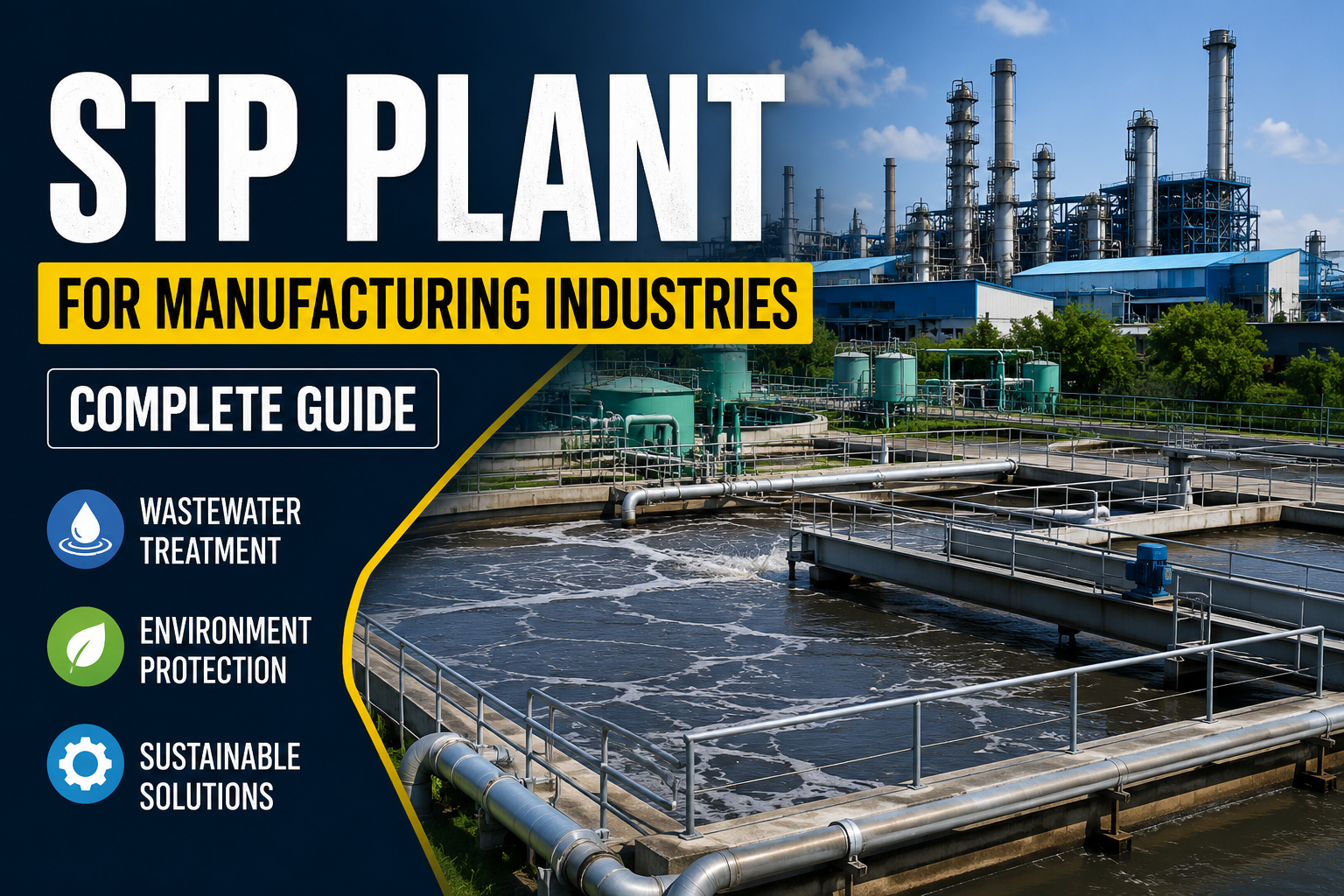
Industrial growth has significantly increased the demand for sustainable water management solutions. Manufacturing industries generate large volumes of wastewater every day, making proper treatment essential for environmental protection, regulatory compliance, and operational efficiency. Installing an STP Plant for Manufacturing Industries helps businesses treat sewage effectively, reduce freshwater consumption, and support long-term sustainability goals.
Whether you operate a textile factory, pharmaceutical unit, food processing plant, or engineering facility, investing in a reliable Industrial STP Plant is no longer optional—it's a smart business decision.
What is an STP Plant for Manufacturing Industries?
An STP Plant for Manufacturing Industries is a sewage treatment system designed to treat domestic wastewater generated from industrial premises, including washrooms, canteens, administrative buildings, and staff facilities. Unlike production wastewater, which is treated in an Effluent Treatment Plant (ETP), sewage water is processed in an STP before being safely discharged or reused.
Modern Industrial Sewage Treatment Plants use advanced biological and filtration processes to remove contaminants, ensuring the treated water meets environmental standards and can be reused for non-potable applications such as gardening, toilet flushing, cooling towers, and floor cleaning.
Powered by Froala Editor
Why Do Manufacturing Industries Need an STP Plant?
Manufacturing facilities consume significant amounts of water every day. Without proper treatment, sewage discharge can harm the environment and lead to regulatory penalties.
Installing an Industrial STP Plant offers several advantages:
Ensures compliance with CPCB and State Pollution Control Board regulations.
Reduces dependence on freshwater by enabling water recycling.
Supports sustainable manufacturing practices.
Lowers operational costs through treated water reuse.
Improves environmental responsibility and corporate image.
Helps industries meet ESG and green building objectives.
As industries continue to focus on sustainability, an efficient Wastewater Treatment Plant for Industries becomes a valuable long-term investment.
Key Benefits of an Industrial STP Plant
Water Conservation
Treated sewage water can be recycled for landscaping, utility operations, and flushing systems, reducing freshwater consumption.
Cost Savings
Reusing treated water significantly lowers water procurement costs and minimizes wastewater disposal expenses.
Environmental Compliance
A properly designed Industrial Wastewater Treatment Solution helps industries comply with environmental regulations while avoiding legal complications.
Sustainable Operations
Water recycling reduces the overall environmental footprint and supports responsible industrial growth.
Reliable Performance
Modern STP systems are automated, energy-efficient, and require minimal operator intervention, making them suitable for continuous industrial operations.
Powered by Froala Editor
How Does an STP Plant Work?
A modern STP Plant for Manufacturing Industries follows multiple treatment stages to ensure high-quality treated water.
1. Preliminary Treatment
Large solids, plastics, and debris are removed through screening and grit removal.
2. Biological Treatment
Beneficial microorganisms break down organic pollutants present in sewage water.
3. Secondary Clarification
Suspended solids settle, allowing cleaner water to move to the next stage.
4. Filtration & Disinfection
Advanced filtration and disinfection remove remaining impurities and harmful microorganisms.
5. Water Reuse
The treated water can be safely reused for various industrial utility applications, reducing freshwater demand.
Powered by Froala Editor
How to Choose the Right STP Plant for Manufacturing Industries
Selecting the right system depends on several factors, including:
Daily sewage generation capacity
Industry type and workforce size
Available installation space
Desired water reuse applications
Automation requirements
Future expansion plans
Compliance with local environmental regulations
Partnering with an experienced manufacturer ensures your treatment plant is customized for your operational needs while delivering long-term performance.
Why Choose Neel Guard Aqua Systems?
With over 15 years of industry expertise, Neel Guard Aqua Systems has established itself as a trusted manufacturer of advanced water and wastewater treatment solutions across India.
The company has successfully installed 1,000+ water treatment plants for 400+ satisfied clients, delivering customized systems for manufacturing industries, pharmaceuticals, food processing, textiles, commercial buildings, hospitals, educational institutions, and government organizations.
NGAS provides complete turnkey solutions, including:
Custom system design and engineering
Manufacturing and supply
Installation and commissioning
Plant upgradation and modernization
Maintenance and technical support
Water quality analysis and treatment consultation
Its advanced Industrial STP Plants are designed for high treatment efficiency, low operating costs, and reliable long-term performance while meeting applicable environmental standards.
Powered by Froala Editor
Conclusion
An efficient STP Plant for Manufacturing Industries is essential for sustainable industrial operations, regulatory compliance, and responsible water management. By treating and reusing sewage water, manufacturers can reduce operating costs, conserve valuable water resources, and minimize their environmental impact.
If you're looking for a reliable Industrial STP Plant tailored to your operational requirements, Neel Guard Aqua Systems offers end-to-end solutions—from design and manufacturing to installation and long-term maintenance—helping industries across India achieve efficient and sustainable wastewater management.
Powered by Froala Editor
Frequently Asked Questions
1. What is the purpose of an STP Plant for Manufacturing Industries?
It treats domestic sewage generated within industrial premises, making the water safe for discharge or reuse.
2. Is an STP different from an ETP?
Yes. An STP treats domestic sewage, while an ETP is designed to treat industrial process wastewater containing chemicals and industrial contaminants.
3. Can treated STP water be reused?
Yes. Treated water can be reused for gardening, flushing, cooling towers, floor cleaning, and other non-potable industrial applications.
4. Which industries require an STP Plant?
Manufacturing industries, pharmaceutical companies, food processing units, textile industries, engineering plants, commercial facilities, hospitals, and educational institutions commonly install STPs.
5. How do I choose the right Industrial STP Plant?
Consider wastewater volume, available space, compliance requirements, treatment technology, automation level, and future expansion before selecting a system.
Still wondering how much an STP will cost for your project? Read our complete STP Plant Cost in India guide to discover capacity-wise pricing, installation costs, and expert tips to choose the most cost-effective solution.
Powered by Froala Editor