
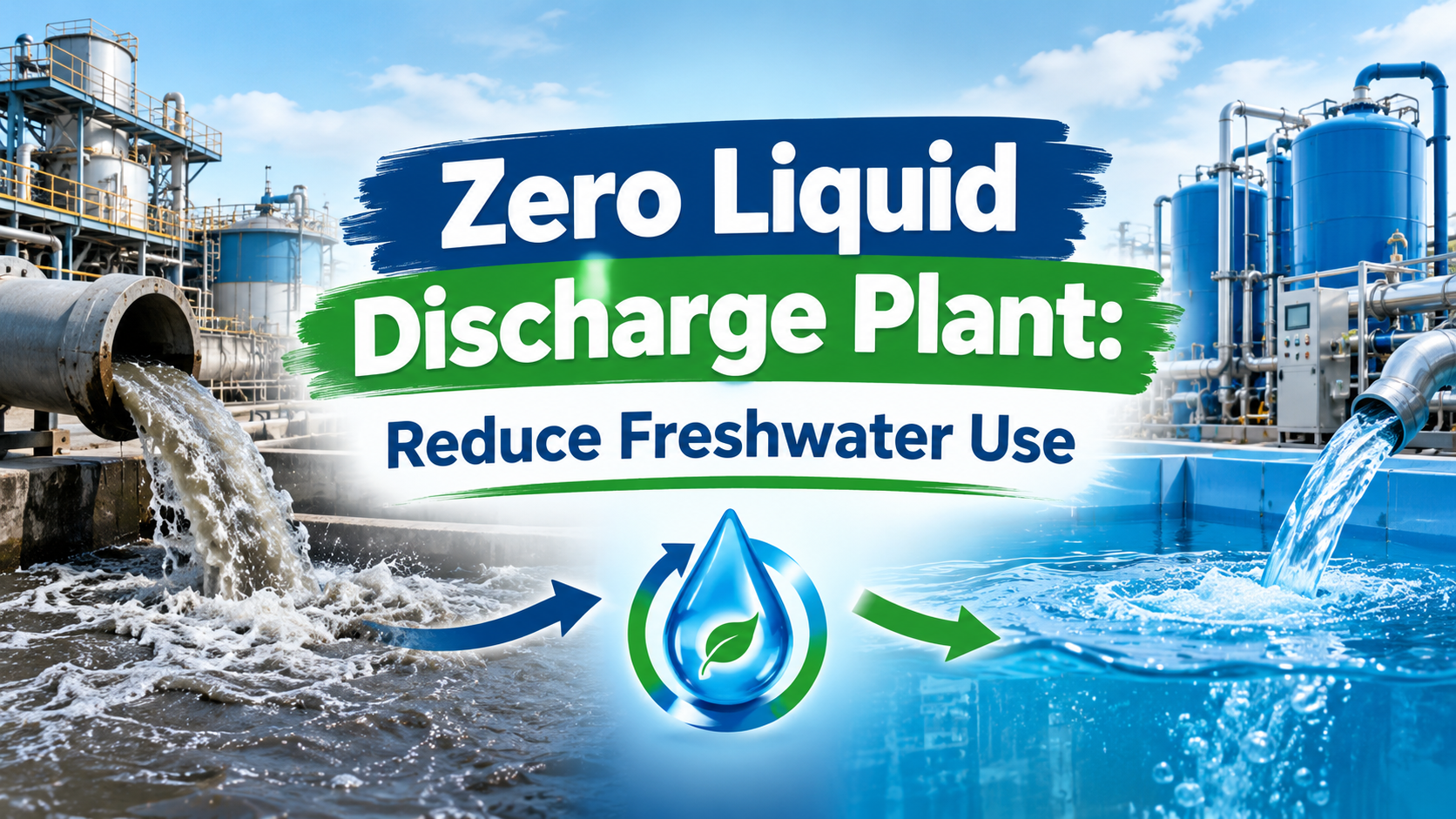
For many industries, water is needed at almost every stage of production. It may be used to prepare raw materials, clean machinery, control temperature, or wash finished products. Once used, this water often contains substances that make it unsuitable for direct reuse.
Instead of treating wastewater as something that must always leave the factory, industries can look at it as a potential source of reusable water. A Zero Liquid Discharge Plant helps recover water from industrial waste streams and return it to suitable applications. This gives factories another way to manage their water requirements, especially when freshwater supplies are limited.
The Problem with Using Freshwater for Every Operation
A factory may use good-quality water for an activity that does not actually require it. For example, some cleaning jobs or utility operations may be able to use properly treated wastewater instead of fresh water.
When water is used once and then discharged without exploring recovery options, the factory loses an opportunity to reuse that resource. The same facility must then bring in more water to meet its next production cycle.
This repeated demand can increase water procurement expenses and put additional pressure on local water sources. Industries can address the problem by examining where water is consumed, what quality each process requires, and which wastewater streams can be recovered.
How a Zero Liquid Discharge Plant Changes Water Management
A Zero Liquid Discharge Plant is designed to recover water from industrial wastewater while managing the remaining concentrated waste. Rather than relying on a single treatment machine, the system uses a combination of processes selected according to the wastewater being generated.
The first step is understanding the wastewater. Water from a washing line may have different contaminants from water used in a chemical process or cooling system. Each stream must be assessed before deciding how it should be treated.
Depending on the results, the system may include filtration, chemical treatment, biological treatment, membrane separation, evaporation, and crystallization. Not every plant requires the same combination of equipment.
Turning Wastewater into a Useful Water Source
Separating Wastewater According to Its Quality
Mixing every wastewater stream together can make treatment more complicated. Where practical, industries can identify streams with different pollution levels and assess them separately.
This helps engineers determine whether a particular stream needs extensive treatment or can be recovered through a simpler process. Proper segregation may also reduce the load placed on advanced treatment equipment.
Recovering Water Through Advanced Treatment
After the required preliminary and primary treatment, membrane systems such as reverse osmosis may separate a portion of the water from dissolved salts and other impurities.
The recovered water is tested to determine whether it meets the needs of the intended application. If necessary, additional treatment is provided before reuse.
The remaining concentrated stream can then move to further treatment, depending on the ZLD design.
Managing the Concentrated Waste
Water recovery does not mean that every contaminant disappears. Salts and other substances become concentrated in the remaining waste stream.
Evaporation and crystallization may be used to recover more water and separate solids. These materials still require suitable handling, recovery, or disposal. Their quantity and composition should be considered when planning the system.
Where Can Industries Reuse Recovered Water?
The best reuse option depends on water quality and the requirements of each industrial process. Some possible applications include equipment washing, floor cleaning, cooling utilities, and other non-potable operations.
For example, a manufacturing unit may evaluate whether treated wastewater can replace freshwater in selected cleaning activities. A textile facility may investigate recovery options for suitable process streams, while a chemical plant may need more advanced treatment because of its wastewater composition.
Testing is essential before making these decisions. Water that is suitable for one application may not meet the requirements of another.
How to Make Water Recovery More Practical
Installing treatment equipment is only one part of reducing freshwater demand. Industries should also monitor how much water enters the facility, where it is used, and how much can realistically be recovered.
Water meters can help identify processes with unusually high consumption. Regular inspection can reveal leaking pipes, inefficient washing practices, or equipment that uses more water than necessary.
Operators should also monitor treatment performance, electricity use, membrane condition, and recovered-water quality. These checks help identify problems before they affect production or increase operating expenses.
What Should Be Evaluated Before Installing a ZLD Plant?
Before selecting a Zero Liquid Discharge Plant in India, an industry should conduct a detailed assessment of its wastewater. Important considerations include daily flow, dissolved salts, organic pollutants, chemical composition, and variations in wastewater quality.
The expected water recovery rate, available installation space, electricity requirements, and management of concentrated waste must also be evaluated.
A ZLD system can involve significant investment and operating expenses, particularly when evaporation is required. Therefore, the expected freshwater savings should be compared with the complete cost of operating the system. This helps businesses make decisions based on actual site conditions rather than assumptions.
Conclusion
Reducing freshwater dependency starts with understanding how water moves through a factory and identifying where it can be recovered. A Zero Liquid Discharge Plant can support this process by treating industrial wastewater, recovering usable water, and managing the remaining concentrated waste.
When the treatment system is designed around actual wastewater conditions and supported by effective water monitoring, industries can make better use of available resources. The goal is not simply to install a treatment plant, but to develop a practical water recovery system that supports daily production and long-term water management.
Frequently Asked Questions
1. Does a ZLD plant recover all the water from wastewater?
No. The recovery rate depends on wastewater quality, treatment technology, and operating conditions.
2. Can different wastewater streams be treated together?
Sometimes, but separate assessment is important because mixing incompatible streams can complicate treatment and reduce recovery efficiency.
3. Does ZLD eliminate solid waste?
No. The process can produce concentrated salts and other solid residues that require appropriate management.
4. How does ZLD reduce freshwater demand?
It recovers water from wastewater so that suitable portions can be reused in industrial operations.
5. What is the first step before installing a ZLD system?
The first step is to analyse wastewater quantity and composition, identify reuse requirements, and assess the technical and financial feasibility of the proposed system.
Powered by Froala Editor