
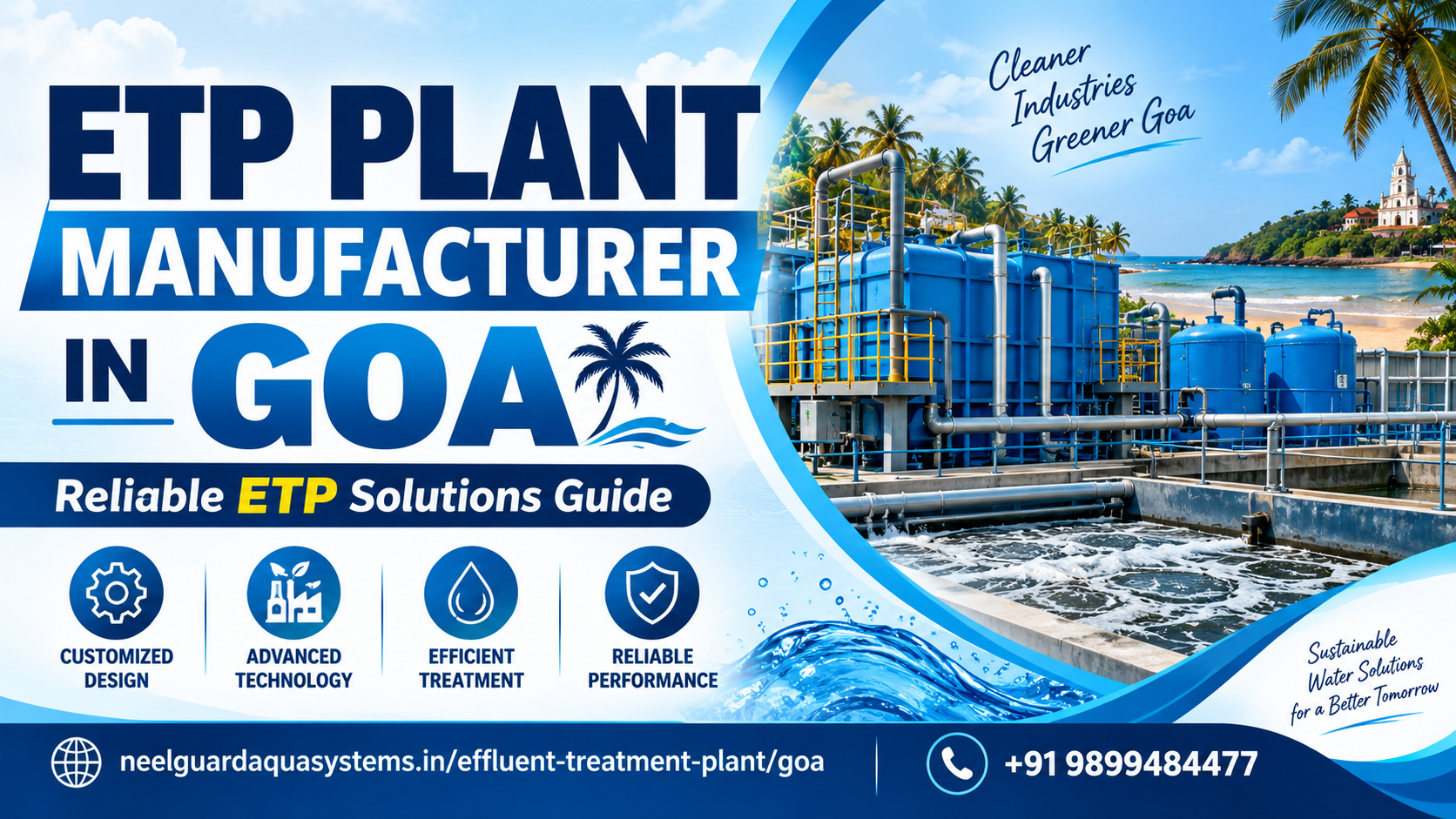
Industrial wastewater management requires a treatment system that is designed according to the specific characteristics and volume of effluent generated by a facility. Choosing the right ETP Plant Manufacturer in Goa can help industries develop a wastewater-treatment system that is aligned with their operational requirements, available space, treatment objectives and long-term maintenance needs.
An Effluent Treatment Plant (ETP) is designed to treat industrial effluent and reduce contaminants through a combination of physical, chemical and biological treatment processes. Since industrial wastewater can differ considerably from one facility to another, the treatment system should be planned according to the actual wastewater characteristics rather than relying on a standard configuration.
Neel Guard Aqua Systems provides customized water and wastewater treatment solutions for industrial, commercial and institutional requirements, with a focus on practical and application-specific treatment systems.
What Is an Effluent Treatment Plant?
An Effluent Treatment Plant is a wastewater-treatment system used to treat effluent generated through industrial and commercial processes. Depending on the industry and manufacturing activity, wastewater may contain suspended solids, organic matter, oils, chemicals, dissolved pollutants and other contaminants.
The purpose of an ETP is to treat this wastewater through appropriate treatment stages before the treated effluent is disncharged or considered for suitable reuse applications.
A properly designed industrial ETP plant should be capable of handling the expected wastewater flow while achieving the required treatment objectives.
Why Industries Need an ETP Plant
Industrial facilities can generate wastewater with characteristics that require controlled and systematic treatment. Discharging inadequately treated effluent can create environmental concerns and may not satisfy applicable requirements.
An appropriately designed effluent treatment plant provides a structured process for managing industrial wastewater. It can help reduce pollutants, improve wastewater handling and, where appropriate, support the reuse of treated water.
For this reason, ETP planning should be considered an important part of the overall industrial infrastructure rather than an afterthought.
Powered by Froala Editor
Factors to Consider Before Selecting an ETP
Choosing the right treatment plant requires a detailed understanding of the facility's wastewater requirements.
1. Wastewater Characteristics
The first step is to understand the characteristics of the incoming effluent.
Different industrial processes can generate wastewater with different pollutant loads. Parameters such as pH, suspended solids, organic matter, oil and grease and other relevant contaminants may influence the treatment process.
A wastewater assessment allows the treatment provider to determine which treatment stages and equipment are appropriate for the application.
2. Required Treatment Capacity
ETP capacity should be calculated according to the actual wastewater generated by the facility.
Average flow is important, but peak flow should also be considered. If production increases in the future, the additional wastewater generation should also be evaluated during the planning stage.
Correct sizing helps avoid problems associated with an overloaded system while preventing unnecessary investment in excessive treatment capacity.
3. Appropriate Treatment Technology
There is no single ETP technology suitable for every industrial application. The treatment process should be selected according to the wastewater characteristics and required treated-effluent quality.
Depending on the application, an ETP may incorporate processes such as:
Screening
Equalization
Oil and grease separation
pH correction
Coagulation and flocculation
Primary clarification
Biological treatment
Secondary clarification
Filtration
Disinfection
Sludge management
The final configuration should be determined according to the specific wastewater-treatment requirement.
ETP Plant Design and Site Requirements
Available space is another important consideration when planning an ETP. Industrial facilities may need to install treatment infrastructure within an existing production site.
The layout should provide adequate space for treatment tanks, pumps, blowers, chemical-dosing systems, electrical panels, pipelines and sludge-handling arrangements.
Maintenance access should also be considered. Equipment should be positioned so that operators and technicians can inspect, service and replace components when necessary.
A properly planned layout can make day-to-day operation easier and contribute to more efficient maintenance.
Treated Effluent Reuse
Modern wastewater management is increasingly focused not only on treatment but also on resource recovery and water conservation.
Where technically suitable and permitted, treated effluent may be considered for certain non-potable applications. Reusing treated water can reduce dependence on freshwater for appropriate activities.
If water reuse is part of the project's objective, it should be considered while designing the ETP. The required treatment quality, filtration, disinfection, storage and distribution should be evaluated together.
Powered by Froala Editor
ETP Installation and Commissioning
Selecting an experienced ETP Plant Manufacturer in Goa is important because the success of a treatment system depends on more than equipment selection.
Installation involves integrating treatment tanks, pumps, pipelines, electrical systems, chemical-dosing equipment and control systems according to the approved design.
Commissioning is another important stage. The plant should be checked and tested before regular operation, and the operating team should understand the basic procedures required for running the system.
A manufacturer that can support design, manufacturing, installation and commissioning can provide a more complete approach to the project.
Operation and Maintenance of an ETP
Regular operation and maintenance are essential for maintaining treatment performance.
Depending on the plant configuration, routine activities may include:
Pump inspection
Blower and aeration-system checks
Chemical-dosing inspection
Filter cleaning
Sludge management
Tank inspection
Pipeline checks
Electrical-panel inspection
Process monitoring
Preventive maintenance can help identify equipment issues before they become major operational problems.
Industries should therefore consider long-term maintenance and technical support while evaluating an ETP supplier.
Powered by Froala Editor
Why Choose Neel Guard Aqua Systems?
Neel Guard Aqua Systems is a water and wastewater treatment solutions provider established in 2011. The company offers solutions including ETP, STP, WTP, RO, DM, UF, water softener and industrial water reuse systems.
For industries looking for an ETP Plant Manufacturer in Goa, Neel Guard focuses on understanding the specific wastewater-treatment requirements of the project before developing a suitable solution.
The planning approach can consider factors such as:
Wastewater characteristics
Treatment capacity
Site conditions
Available installation space
Required treated-water quality
Water-reuse objectives
Operation and maintenance requirements
Neel Guard provides support across different stages of treatment-system development, including design, manufacturing, installation and commissioning.
This project-specific approach can help industries select a wastewater-treatment system that is better aligned with their actual operational requirements.
Benefits of a Properly Designed ETP Plant
A properly designed ETP can provide several benefits for industrial wastewater management:
Systematic handling of industrial effluent
Reduction of wastewater pollutants
Better control over treatment processes
Support for applicable discharge requirements
Potential for suitable treated-water reuse
Improved water-resource management
Better sludge-handling arrangements
More structured long-term maintenance
The actual performance and benefits depend on the wastewater characteristics, treatment configuration, operating conditions and quality objectives of the project.
Common ETP Selection Mistakes
Industries should avoid choosing an ETP solely on the basis of the initial quotation.
Common mistakes can include selecting an incorrect capacity, ignoring wastewater characteristics, choosing unsuitable technology or failing to consider future production requirements.
Another common issue is overlooking operation and maintenance requirements. A system may appear economical initially but become expensive to operate if energy consumption, chemical requirements and maintenance are not considered properly.
A complete evaluation should therefore consider the design, treatment performance, installation, operation, maintenance and long-term suitability of the plant.
Questions to Ask an ETP Manufacturer
Before selecting an ETP supplier, industries should ask:
What treatment process is suitable for the wastewater?
How has the required ETP capacity been calculated?
What wastewater parameters need to be evaluated?
What treated-effluent quality is required?
How much installation space is needed?
What are the expected operating requirements?
What maintenance will the system require?
Is installation and commissioning support provided?
Is technical assistance available after commissioning?
Can the system be modified for future requirements?
These questions can help project owners make a more informed decision.
Powered by Froala Editor
Conclusion
Selecting the right ETP Plant Manufacturer in Goa requires more than comparing equipment prices. Wastewater characteristics, treatment capacity, technology, site conditions, treated-effluent requirements, installation and long-term maintenance all need to be evaluated together.
A properly planned effluent treatment plant can provide a structured approach to industrial wastewater management while supporting responsible water use and potential treated-water reuse.
Neel Guard Aqua Systems offers ETP and wastewater-treatment solutions designed around project-specific requirements, with support covering design, manufacturing, installation and commissioning. For industries planning wastewater-treatment infrastructure in Goa, evaluating the complete project requirement is the first step toward selecting a practical and reliable ETP solution.
Powered by Froala Editor
Frequently Asked Questions
Powered by Froala Editor