
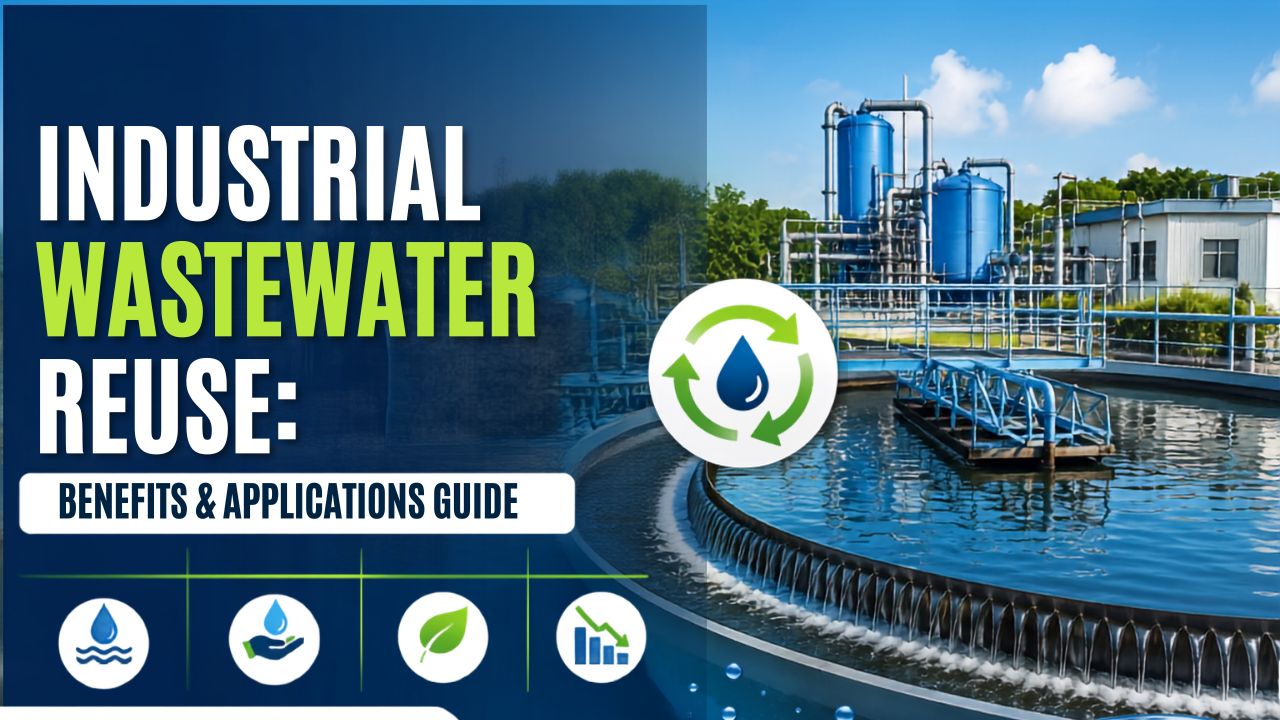
Water-intensive industries generate large volumes of wastewater every day, while freshwater availability is becoming an increasingly important business concern. Treated wastewater reuse offers industries an opportunity to recover water that would otherwise be discharged and use it for suitable non-potable applications.
However, reuse is not simply about treating wastewater and using it anywhere. The required treatment depends on the wastewater quality, intended application, and applicable standards. With the right approach, industrial wastewater reuse can support water conservation, reduce freshwater demand, and improve overall water management.
Why Are Industries Reusing Treated Wastewater?
Industries often require significant quantities of water for production, cooling, cleaning, landscaping, utilities, and other operations. Depending entirely on freshwater can increase pressure on local water resources and operating costs.
By introducing wastewater recycling, industries can recover water for suitable applications after appropriate treatment. This can also reduce the volume of wastewater requiring discharge.
India's water-management approach is increasingly emphasizing the safe reuse of treated wastewater, including applications in industries and other non-potable areas.
How Does Treated Wastewater Become Reusable?
The treatment process depends on the characteristics of the wastewater and its intended reuse.
A typical treatment approach may involve:
Wastewater collection → Primary treatment → Biological treatment → Clarification → Tertiary or advanced treatment → Quality testing → Reuse
Primary and biological treatment can remove suspended and biodegradable pollutants, while additional treatment may be required when higher-quality water is needed.
For example, water intended for landscaping may have different requirements from water considered for industrial process applications. Therefore, treatment should always be designed around the final use.
Where Can Industries Reuse Treated Wastewater?
1. Cooling Applications
Some industries can use appropriately treated wastewater for cooling-related applications. However, parameters such as scaling, corrosion, dissolved solids, and microbiological growth need to be managed to protect cooling equipment.
2. Industrial Process Water
Depending on the manufacturing process and required water quality, treated wastewater can sometimes be recovered for selected process applications. The treatment system should be designed according to the specific contaminants and quality requirements involved.
3. Boiler-Related Applications
Boiler systems generally require carefully controlled water quality. Treated wastewater may require additional processes such as filtration, softening, demineralization, or other advanced treatment before being considered for boiler-related use.
4. Cleaning and Washing
Suitable treated water can be used for certain floor, equipment, or utility-area cleaning applications where potable-quality water is not necessary.
5. Landscaping and Gardening
Landscaping is one of the practical applications for appropriately treated wastewater. Reusing water for gardens and green areas can reduce the demand for freshwater, provided the treated water meets the requirements for the intended application.
6. Toilet Flushing
In suitable facilities, treated wastewater can be supplied for toilet flushing through a properly designed separate distribution system. This can reduce freshwater consumption without using drinking-quality water for flushing.
Benefits of Industrial Wastewater Reuse
Reduced Freshwater Consumption
Reusing treated water for suitable applications can reduce an industry's dependence on freshwater sources.
Better Water Resource Management
Water recycling allows industries to recover value from wastewater rather than treating it only as a waste stream.
Lower Wastewater Discharge
When more treated water is reused, the volume requiring discharge can potentially be reduced, subject to applicable requirements.
Improved Water Security
Industries with consistent water-reuse systems can create an additional source of water for selected operations, helping improve resilience during periods of limited water availability.
Support for Sustainable Operations
Water reuse contributes to resource efficiency and supports the broader concept of circular water management.
What Challenges Should Industries Consider?
Although treated water reuse has clear advantages, it requires proper planning.
Water quality: Reuse water must be suitable for its intended application.
Additional treatment: Some applications may require tertiary or advanced treatment beyond conventional wastewater treatment.
Storage and distribution: Separate tanks, pipelines, pumps, and monitoring systems may be required.
Scaling and corrosion: Industrial reuse systems need appropriate control of dissolved minerals and other parameters.
Monitoring: Regular testing helps ensure that treated water continues to meet the required quality.
Initial investment: Treatment upgrades and reuse infrastructure can require additional capital expenditure.
These factors should be evaluated before deciding where treated wastewater can be reused.
How Can an Industry Start a Water Reuse Program?
A practical approach is to begin with a water audit. The industry should identify how much freshwater it consumes, where that water is used, and how much wastewater is generated.
The next steps can include:
Characterizing the wastewater.
Identifying suitable reuse applications.
Defining the required water quality.
Selecting appropriate treatment technology.
Planning storage and distribution.
Establishing a water-quality monitoring system.
Reviewing applicable regulatory requirements.
This approach helps ensure that the treatment system is designed around actual operational needs rather than assumptions.
Frequently Asked Questions
Can treated wastewater be reused in industries?
Yes. Appropriately treated wastewater can be reused for suitable industrial and non-potable applications when it meets the required quality for the intended use.
Which industries can reuse treated wastewater?
Manufacturing, textile, power, hospitality, commercial, and other water-intensive industries may have opportunities for wastewater reuse, depending on their processes and water-quality requirements.
Can treated wastewater be used for cooling?
Yes, in suitable applications. However, water quality must be controlled to manage scaling, corrosion, dissolved solids, and microbiological issues.
Is additional treatment required before wastewater reuse?
It depends on the intended application. Some uses may require only appropriate conventional treatment, while higher-quality applications may require filtration, disinfection, RO, or other advanced processes.
What is the difference between wastewater treatment and wastewater reuse?
Wastewater treatment focuses on removing pollutants and producing treated water. Wastewater reuse goes one step further by putting appropriately treated water back into a suitable application.
Conclusion
Industrial wastewater reuse can help businesses reduce freshwater demand, improve resource efficiency, and strengthen long-term water management. However, successful reuse requires more than simply treating wastewater. The treatment process, water quality, intended application, infrastructure, monitoring, and regulatory requirements all need to be considered.
With proper planning and the right treatment approach, wastewater can become a valuable resource rather than simply a waste stream.
Powered by Froala Editor