
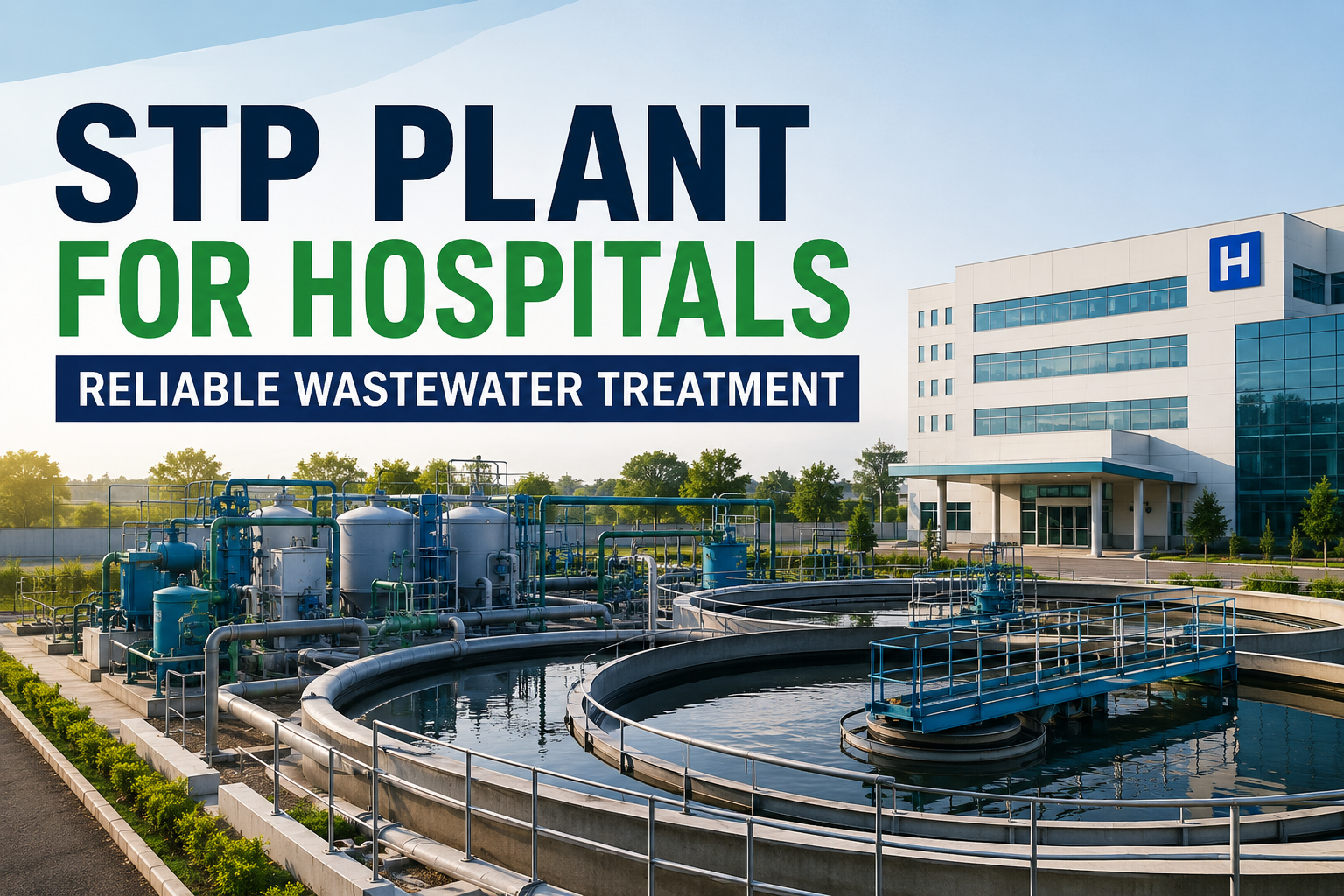
Hospitals generate wastewater every hour of every day. Operation theatres, wards, laundries, kitchens, and diagnostic labs release water mixed with organic waste, chemicals, and pathogens, which cannot be sent directly into drains or rivers. This is why every facility needs a reliable hospital sewage treatment plant.
An STP plant for hospitals treats this wastewater before it is reused or discharged. It removes harmful contaminants, protects public health, and helps hospitals meet pollution control norms every day, not occasionally.
Neel Guard Aqua Systems designs and installs STP plants built specifically for healthcare wastewater treatment, keeping hospital layouts, budgets, and compliance needs in mind.
Why Hospitals Need an STP Plant
Hospital wastewater comes from multiple sources. Wards, operation theatres, pathology labs, kitchens, and laundry rooms each contribute water loaded with organic matter, detergents, and biological waste.
Without treatment, this water carries bacteria, viruses, and chemical residues into local drains or water bodies, creating health risks for the community and violating pollution control norms.
Treated water, on the other hand, can be reused for gardening, flushing, or cooling systems, helping hospitals save a significant volume of freshwater every month.
Regulatory bodies also require hospitals to install and maintain an STP as a condition for operating licenses and NABH accreditation. Installing a proper hospital wastewater treatment plant is therefore a compliance requirement, not just an environmental one.
Common Challenges in Hospital Wastewater Treatment
Hospital wastewater is different from residential or commercial sewage. Medical wastewater treatment brings challenges a standard sewage system is not designed to handle.
Medical Contaminants
Hospital water often contains disinfectants, pharmaceutical residues, and pathogens not found in regular sewage. Standard treatment systems are not always built for this load, so the STP must be engineered for hospital-specific inputs.
Fluctuating Wastewater Volume
Patient inflow changes daily. OPD hours, surgeries, and emergency admissions all affect wastewater volume, so the plant must handle these swings without losing treatment efficiency.
Limited Installation Space
Most hospitals are built on tight footprints, with little room left for utility infrastructure. A hospital STP plant often needs a compact, space-efficient design that fits basements or narrow utility areas.
Maintenance Planning
Hospitals cannot afford downtime in hospital wastewater management. A poorly maintained STP can overflow or fail, creating hygiene risks in a facility where hygiene matters most. Maintenance schedules need to be planned around hospital operating hours.
Water Reuse Requirements
Many hospitals want treated water for gardening, cooling towers, or flushing to cut freshwater costs, which means the plant must meet reuse standards, not just discharge standards.
Powered by Froala Editor
How an STP Plant Works in Hospitals
A hospital STP system works in stages, each one removing a different type of contaminant until the water is safe to reuse or discharge.
Collection
Wastewater from wards, labs, kitchens, and laundries is collected through pipes into a central tank, which balances the flow before treatment begins.
Screening
Screens remove large solids like cloth, plastic, and debris, protecting downstream equipment from clogging and keeping the process running smoothly.
Biological Treatment
Beneficial bacteria break down organic waste in this stage, reducing most of the pollution load before the water moves ahead.
Clarification
The treated water is separated from settled solids and biological sludge. Clear water moves forward for treatment, while sludge is removed separately.
Disinfection
Chlorination or UV treatment kills remaining pathogens and bacteria. This step is critical for medical wastewater treatment, since hospital wastewater carries a higher risk of infectious contaminants than regular sewage.
Water Reuse or Safe Discharge
The final treated water meets pollution control norms and can be reused for gardening, flushing, or cooling, or safely discharged as per local regulations.
Powered by Froala Editor
Benefits of Installing an STP Plant
Better Hospital Wastewater Management
A well-designed hospital STP plant gives hospitals full control over wastewater handling instead of relying on external tankers or unmanaged discharge, reducing operational risk.
Water Reuse
Treated water can replace freshwater for gardening, flushing, and cooling needs, cutting down dependency on external water sources during shortages.
Reduced Freshwater Consumption
By reusing treated water for non-drinking purposes, hospitals lower their overall freshwater demand, which also reduces monthly water bills over time.
Easier Regulatory Compliance
An operational STP helps hospitals meet Pollution Control Board norms and supports accreditation processes like NABH, avoiding penalties or license issues.
Long-Term Operational Efficiency
A properly sized and maintained plant runs with lower energy and manpower costs over its lifespan.
Sustainable Hospital Operations
Treating and reusing wastewater reduces a hospital's environmental footprint, supporting sustainability goals that many healthcare accreditation bodies now expect.
If your hospital is planning a new facility or upgrading an existing setup, understanding your wastewater volume is a good starting point before choosing hospital water treatment solutions.
How to Choose the Right STP Plant for Your Hospital
Choosing a sewage treatment plant for hospitals is a long-term decision. It affects daily operations, compliance, and costs for years. A few factors matter most.
Hospital Size
Bed count and daily patient footfall directly affect wastewater volume. A 50-bed hospital and a 300-bed hospital need very different plant capacities.
Daily Wastewater Generation
Calculate approximate daily wastewater output, including wards, OT, labs, kitchen, and laundry. This number decides the treatment capacity you need.
Available Space
Basements, terraces, or open utility areas all call for different plant configurations. Compact or modular STPs work well where space is limited.
Treatment Technology
Options like MBBR, SBR, or MBR each suit different needs. A consultant should match the technology to your wastewater load and reuse goals.
Maintenance Requirements
Ask how much manpower and monitoring the system needs, since a plant that is difficult to maintain often underperforms within a few years.
Future Expansion
Hospitals grow. Choosing a plant with some built-in capacity for future bed additions saves the cost of a full upgrade later.
Water Reuse Goals
If you plan to reuse treated water for gardening or flushing, the disinfection stage needs to be planned accordingly from day one.
Powered by Froala Editor
Why Choose Neel Guard Aqua Systems
Neel Guard Aqua Systems has been designing and installing water and wastewater treatment plants since 2011, with more than 15 years of experience as a hospital STP plant manufacturer.
The company has completed over 1000 installations and works with more than 400 clients across sectors, including healthcare.
NGAS handles the complete process in-house — design, manufacturing, installation, commissioning, and AMC — so hospitals work with a single accountable team instead of multiple vendors.
With a presence across India, NGAS supports hospitals in different cities with consistent service and maintenance support after installation, as part of complete hospital water treatment solutions.
If you are evaluating an STP plant for hospitals, NGAS can walk you through the right plant size and technology based on your facility's requirements.
Powered by Froala Editor
Conclusion
Hospital wastewater carries risks that ordinary sewage does not, making treatment a necessity rather than a formality. A well-designed hospital sewage treatment plant protects public health, supports compliance, and reduces freshwater dependency.
Choosing the right STP plant for hospitals depends on size, space, wastewater volume, and future plans. Working with an experienced hospital STP plant manufacturer like Neel Guard Aqua Systems, which handles design through AMC under one roof, makes this decision easier to manage long term.
Powered by Froala Editor
Frequently Asked Questions
- What is an STP plant used for in hospitals?
A sewage treatment plant for hospitals treats wastewater from wards, OT, labs, kitchens, and laundries, removing contaminants and pathogens so the water can be safely reused or discharged. - Why do hospitals need a dedicated wastewater treatment system?
Hospital wastewater contains medical contaminants and pathogens not found in regular sewage. Dedicated healthcare wastewater treatment handles this specific load and meets the stricter discharge standards hospitals must follow. - How is hospital wastewater different from regular sewage?
Hospital wastewater carries pharmaceutical residues, disinfectants, and higher bacterial loads from clinical activities. This is why a hospital wastewater treatment plant is engineered differently from a standard municipal system. - Can treated hospital wastewater be reused?
Yes. Once treated and disinfected, hospital wastewater can be reused for gardening, flushing, or cooling systems, reducing dependency on freshwater sources for non-drinking purposes. - Do all hospitals need an STP plant by law?
Most State Pollution Control Boards require hospitals to install and operate a hospital STP system as a condition for their operating license. It is also often tied to healthcare accreditation requirements.
Still wondering how much an STP will cost for your project? Read our complete STP Plant Cost in India guide to discover capacity-wise pricing, installation costs, and expert tips to choose the most cost-effective solution.
Powered by Froala Editor